
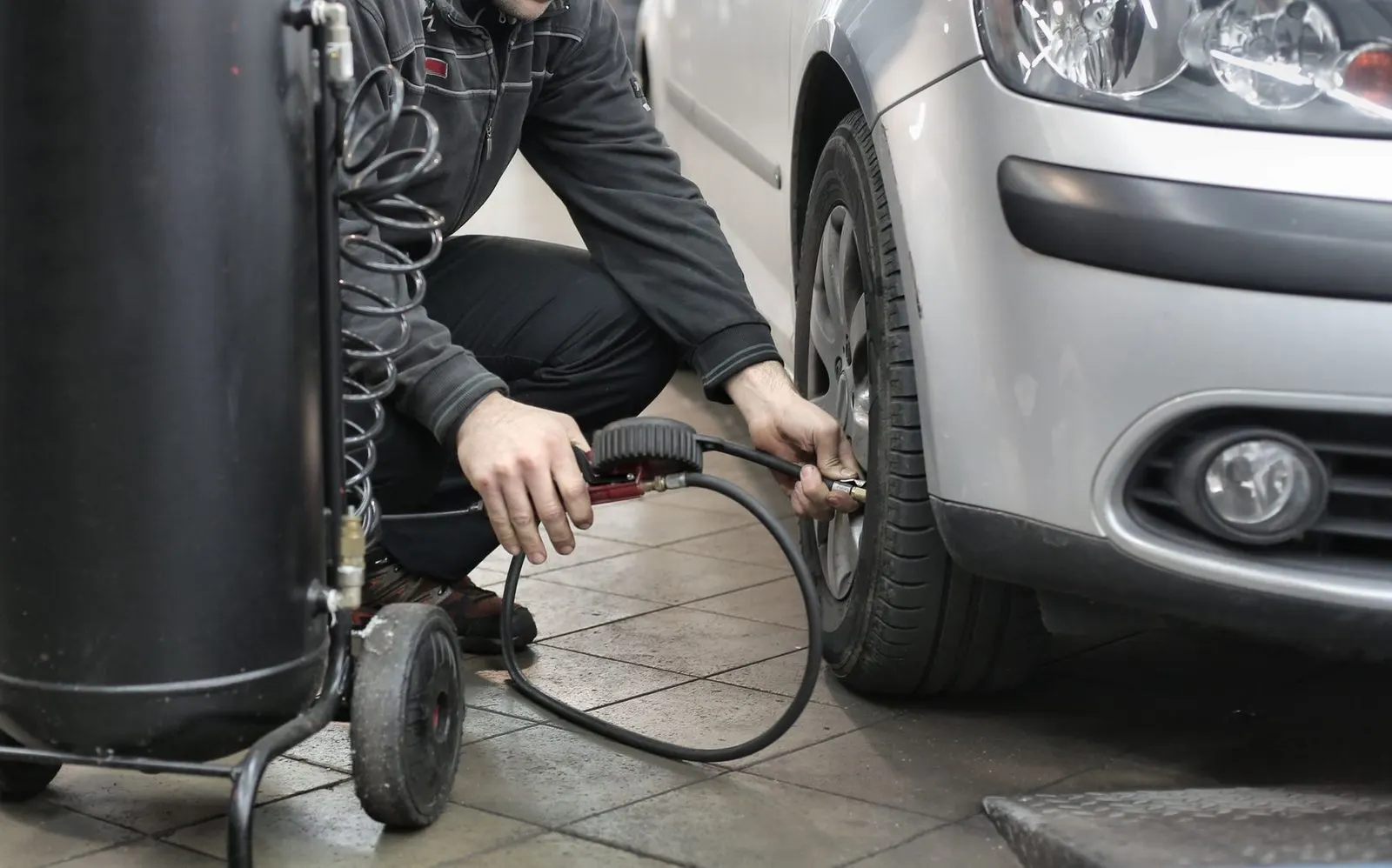
Tyres are the only part of the car that touches the road. Everything else, from the brakes to the steering, works through four patches of rubber. When they are worn, damaged or on the wrong pressure, the whole car is worse at stopping, turning and staying put on a loose surface.
Symptoms
Signs your tyres need attention:
- Low tread, especially if it is close to or level with the wear indicators.
- Uneven wear, such as one edge worn more than the other or a patchy pattern.
- A tyre that keeps losing air, needing top-ups more often than the others.
- Cracks, cuts or bulges in the sidewall.
- A vibration through the steering wheel or the seat, often at a particular speed.
- A tyre warning light on the dashboard, if your car has one.
- Something stuck in the tread, such as a nail or stone.
Why it matters
Worn or under-inflated tyres take longer to stop, grip less in corners and are more likely to fail. In heat, a tyre running on low pressure gets hotter, and heat is hard on rubber.
Gravel and sand roads ask more of tyres again. Sharp stones, ruts and loose surfaces cause cuts and damage that you might not notice until the tyre starts losing air. Long distances between towns are a good reason to make sure your tyres are in good shape before you set off.
Tyres also tell you about the rest of the car. Uneven wear often points to an alignment or suspension problem, which is worth fixing before it chews through a new set.
What the job generally involves
A tyre service generally starts with looking at the tyres: tread, sidewalls, pressures and how they are wearing. Then:
- You tell us what you have noticed: losing air, a vibration, a warning light or just worn tread.
- We check the tyres and look for the cause of any problem.
- We explain what we found, including anything the wear pattern says about the rest of the car.
- You decide. We do the work once you say go.
Practical tips
- Check your pressures regularly, when the tyres are cold.
- Look at your tyres when you walk round the car. Bulges and cuts are easy to spot once you look.
- Do not forget the spare. It is no help if it is flat too.
- Slow down on gravel and over sharp stones, and avoid driving on a tyre that is losing air fast.
- Pay attention to uneven wear. It is a clue, not just a tyre problem.
Related services
Tyre service sits under auto mechanics. If your tyres are wearing unevenly, see wheel alignment and steering and suspension.